Crape Myrtle Pruning: Doing It Right in Florida
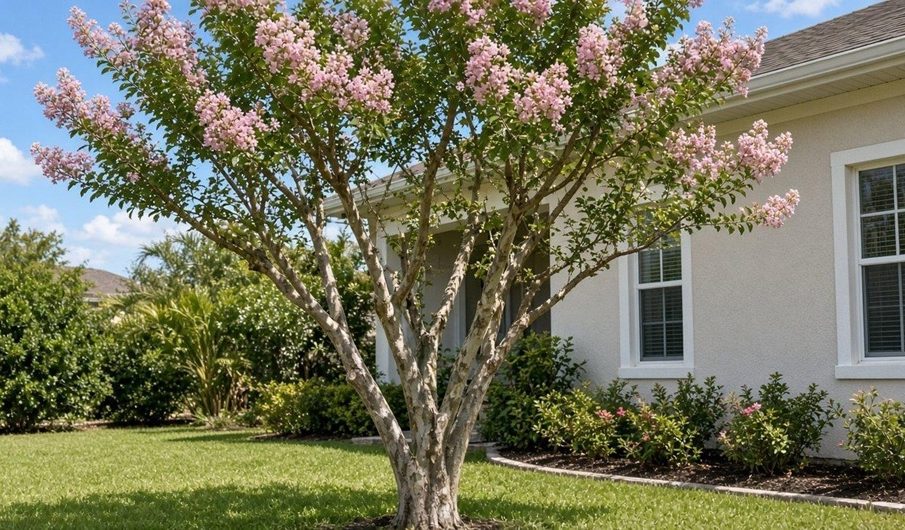
Crape myrtles are one of the most popular flowering trees in Florida yards. They bloom for weeks in summer, handle heat well and come in many sizes and colors, yet they get pruned the wrong way more often than almost any other tree. Good crape myrtle pruning keeps the tree healthy, strong and full of blooms.
The most common mistake is cutting every trunk back to the same height, leaving thick, blunt stubs. This is often called topping, and while it may look neat for a short time, it causes a burst of thin, weak shoots at each cut. Those shoots can bend or break under the weight of flowers or in storms. Over time, the cut spots can swell into knobby knuckles and the tree loses its natural shape.
A better approach is light, selective crape myrtle pruning in late winter, before new growth starts. Since crape myrtles bloom on new wood, pruning then will not cost the season’s flowers.
Start with the basics:
- Remove dead, broken or diseased branches.
- Cut off suckers growing from the base of the trunk.
- Take out branches that cross and rub against each other.
- Thin crowded inner growth to let in light and air.
When cutting a branch, make the cut just outside the branch collar, the slightly raised ring where it meets a larger limb. This helps the tree seal the wound. Avoid leaving long stubs or cutting flush against the trunk.
If a crape myrtle is too big for its spot, heavy pruning every year is not a lasting fix, and choosing a variety sized for the space works far better. Dwarf and medium types are widely available.
Small trees can often be handled with hand pruners and loppers, while taller trees, or ones near power lines, are safer left to a tree care crew.
With the right timing and a light touch, crape myrtle pruning helps these trees look their best year after year.
For more pruning tips, visit Arbor Wise Tree Services, a tree care company based in St. Petersburg, Florida.