Mudjacking vs. Polyurethane Foam: Fixing a Sinking Driveway
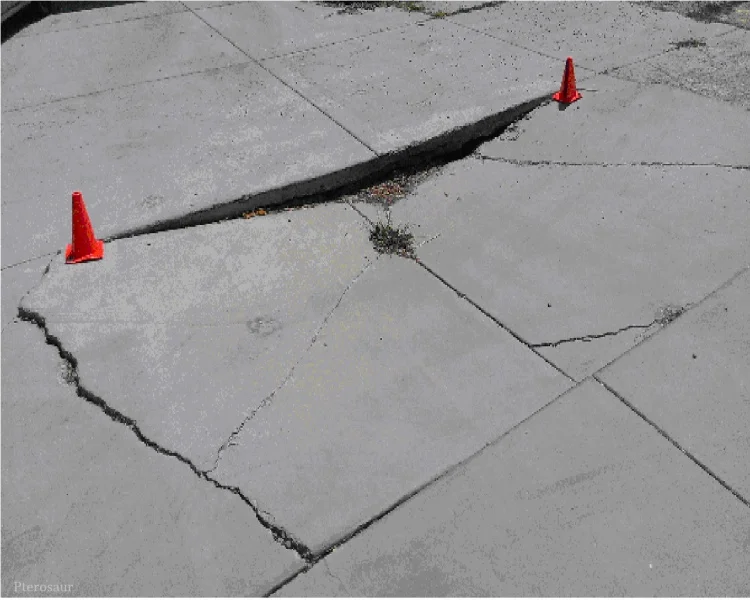
Few sights frustrate a homeowner quite like a driveway slab that has begun to pull away, tilt, or sink into the ground. Beyond the obvious blow to your home’s curb appeal, an uneven concrete apron creates a harsh jolt every time you pull into the garage, turns into a tripping hazard for children and visitors, and allows rainwater to pool against your foundation.
Faced with this issue, many homeowners assume the only remedy is to jackhammer the sunken slabs, haul away tons of debris, and pour brand-new concrete. In reality, full slab replacement is rarely necessary. If the concrete itself is structurally sound and free from severe spiderweb cracking, lifting and leveling the existing slab is far faster, cleaner, and dramatically less expensive.
The real decision comes down to the technology used beneath the surface. Homeowners are generally caught between two competing methods: traditional mudjacking and modern polyurethane foam injection. While both achieve the same basic goal of raising sunken concrete back to its original height, they rely on completely different materials, structural dynamics, and long-term performance principles.
Why Concrete Driveways Sink in the First Place
Understanding why your driveway settled is essential before selecting a repair strategy. Concrete itself is exceptionally rigid and boasts high compressive strength, but it possesses almost no tensile strength. It relies entirely on the subgrade—the soil and crushed aggregate beneath it—for continuous structural support.
Driveway settlement is almost always caused by soil failure rather than a defect in the concrete slab:
-
Poor sub-base compaction: When homes are built, builders dig out basements, utility trenches, and driveways. If the backfilled soil is not compacted thoroughly with heavy equipment in small, measured lifts, the loose ground will slowly settle over five to ten years under the sheer weight of vehicle traffic.
-
Water runoff and subgrade erosion: Gutters discharging near the edges of a driveway, misdirected downspouts, or poor grading can route thousands of gallons of stormwater directly beneath the slabs. Over time, this water washes away the fine bedding sand and topsoil, creating hidden voids.
-
Freeze-thaw cycles: In cold-weather climates, moisture trapped in expansive clay soils freezes and expands during winter, lifting slabs unevenly. When the ground thaws in the spring, the soil softens, allowing the heavy slab to sink deeper than its original grade.
-
Organic soil breakdown: In some developments, buried tree stumps, roots, or organic construction debris slowly decompose over decades, leaving localized subterranean cavities that can no longer bear weight.
If you pour new concrete over an unaddressed subgrade void, the new slab will simply follow the exact same path and sink again within a few years. Raising the slab with an injection material stabilizes that void, directly tackling the root problem.
Mudjacking: The Traditional Heavyweight
Mudjacking, sometimes referred to as slabjacking or grout pumping, has been the industry standard for residential concrete lifting since the early twentieth century. It is a mechanical process that relies on hydraulic force and a dense, natural slurry to fill voids and force concrete upward.
How the Mudjacking Process Works
To perform mudjacking, an installation crew drills a series of holes through the sunken sections of your driveway. These holes are relatively large, typically measuring 1.5 to 2 inches in diameter, roughly the size of a beverage can top.
Once the holes are bored, a high-pressure pump is connected to an injection nozzle inserted into the slab. The pump forces a thick slurry beneath the concrete. This mixture—commonly made of pulverized limestone, local topsoil, sand, water, and a small percentage of Portland cement for binding—spreads out beneath the concrete, displacing air and filling voids. As the cavity fills completely, the hydraulic pressure generated by the incoming slurry slowly lifts the concrete slab back to its intended elevation.
When the lift is complete, the technicians clean the excess slurry, insert wooden or rubber plugs into the access holes, and patch the top two inches with standard hydraulic cement mortar.
Pros and Cons of Mudjacking
Mudjacking remains popular primarily because of its upfront affordability. Because the materials consist largely of mined quarry dust, soil, and water, raw material costs are low. If you have a massive concrete apron with substantial void space and you are working on a strict budget, mudjacking offers an attractive initial price tag.
However, mudjacking carries distinct structural drawbacks:
The most significant flaw is its extreme weight. A typical mudjacking slurry weighs between 100 and 140 pounds per cubic foot. If your driveway sank because the native soil was too weak or poorly compacted to support a 400-pound concrete slab, pumping several thousand pounds of heavy limestone mud on top of that same weak soil creates serious long-term risk. The added mass can easily overburden the subgrade, leading to secondary settlement down the road.
Furthermore, because mudjacking slurry is an earth-based mortar, it remains vulnerable to water. If the drainage issue that caused the original void is not permanently corrected, water running under the driveway can slowly erode and wash away the cured mudjacking slurry, causing the slab to drop once again.
Finally, the visual impact is hard to hide. Patching multiple two-inch drill holes across a driveway leaves noticeable, polka-dot-style blemishes that rarely match the weathered color and texture of surrounding aged concrete.
Polyurethane Foam: The Modern High-Tech Solution
Often called polyjacking or foam leveling, polyurethane injection was originally engineered for heavy commercial applications, such as stabilizing active airport runways, interstate highway slabs, and commercial rail beds. Over the last two decades, advances in specialized chemical formulations and mobile proportioning equipment have made it the premier solution for residential driveways.
How Polyurethane Foam Works
Polyurethane concrete lifting uses a closed-cell, high-density polymer formed by combining two chemical components: an isocyanate and a polyol blend. These two liquid elements are kept separated inside a heated mobile rig and routed through individual hoses directly to an injection gun.
The mechanical footprint on your driveway is remarkably discreet. Instead of large two-inch cores, the crew drills tiny holes measuring just 5/8 of an inch in diameter, about the width of a penny.
The technician injects the liquid mixture beneath the sunken slab. Within three to five seconds, the two components undergo an aggressive exothermic chemical reaction, expanding into an extremely rigid, closed-cell structural foam. As it expands, the foam takes the path of least resistance: it fills tiny micro-fractures, travels deep into the underlying soil matrix to compact loose gravel, and then exerts tremendous upward hydraulic lift to float the heavy slab back into place.
Once the desired grade is reached, the injection port is removed, and the small 5/8-inch hole is filled with an exact-matched concrete patch that blends almost invisibly into the existing slab.
Pros and Cons of Polyurethane Lifting
Polyurethane foam offers unmatched technical advantages over traditional slurries. First and foremost is its lightweight profile. Structural polyurethane foam weighs only 2 to 4 pounds per cubic foot, compared to more than 100 pounds for mudjacking grout. It restores the slab to its proper plane while adding virtually zero dead load to the compromised soil underneath.
Secondly, high-density polyurethane is inherently hydrophobic. It does not absorb moisture, and it will never break down, wash away, or rot when exposed to groundwater, heavy spring runoffs, or road salt brine. The closed-cell structure acts as a permanent, waterproof barrier directly beneath the concrete joints.
The primary hurdle for most homeowners is upfront cost. The raw polymer chemicals are far more expensive to synthesize than limestone quarry slurry, and the specialized heating and metering equipment requires significant capital investment by the contractor. As a result, polyurethane lifting generally carries a higher initial quote than mudjacking.
Critical Comparison Factors for Homeowners
When weighing these two concrete repair avenues, examining specific functional factors helps clarify which approach makes sense for your property.
Subgrade Impact and Long-Term Stability
If your driveway rests on loose sand, soft silt, or uncompacted fill dirt, adding mass is a recipe for failure. Polyurethane foam stabilizes the subgrade by migrating through loose soil particles before expanding, effectively binding the top layer of earth together into a solid base. Mudjacking simply rests its substantial tonnage on top of whatever soil happens to be there, increasing the odds that the entire slab assembly will settle deeper in the future.
Visual Aesthetics and Drill Holes
A driveway sits front and center on your property. Mudjacking requires drilling holes roughly the size of a golf ball across every slab that needs adjustment. Even the most skilled contractor cannot make a two-inch mortar plug disappear against an oxidized, aggregate-exposed driveway.
Polyjacking requires holes smaller than a dime, often drilled directly through saw-cut expansion joints when possible. Once patched with aggregate-infused caulk or tinted mortar, these ports are virtually undetectable from the street.
Cure Time and Property Access
Mudjacking slurry relies on water evaporation and the hydration of cement to harden. It requires anywhere from 24 to 72 hours to fully set before you can drive a passenger car or heavy SUV onto the slab. Using the driveway too early will squeeze the wet mud out of the drill holes or shift the uncured base.
Polyurethane foam expands, lifts, and cures through a self-contained chemical reaction. It reaches 90 percent of its full compressive strength within 15 to 30 minutes. In most cases, you can park your vehicle back in the garage before the contractor’s truck has even pulled away from your curb.
Moisture Resistance and Climate Performance
Driveways endure relentless exposure to rainfall, lawn sprinklers, and melting snowbanks. Because water naturally flows through concrete expansion joints, the material underneath is guaranteed to get wet. Mudjacking slurry can soften, disintegrate, or channel out if persistent water runs along the sub-base. Polyurethane foam is a closed-cell plastic that forms an impenetrable seal, preventing water from carving paths under the slab and stopping frost heave in its tracks.
Weighing Upfront Cost Against True Value
For many homeowners, the ultimate decision hinges on immediate budget versus expected lifespan.
Mudjacking usually costs roughly 20 to 30 percent less on initial installation than polyurethane foam. For a small void or a quick cosmetic fix on a home you plan to sell within a year or two, mudjacking offers an inexpensive, functional repair that passes home inspections without breaking the bank.
However, calculating the true cost of hardscaping requires evaluating longevity. Mudjacking projects carry an industry-average warranty of one to two years, precisely because contractors know that the slurry can wash out or overburden weak soil over time. Polyurethane foam installations routinely come backed by five- to ten-year transferable warranties, and the structural foam itself is chemically engineered to remain inert and intact underground indefinitely.
When you factor in the high likelihood of having to re-lift a mudjacked slab five to seven years later, the higher initial cost of polyurethane leveling frequently proves to be the cheaper investment over the life of your home.
Choosing the Right Solution for Your Driveway
To choose the best approach, assess the specific conditions of your concrete and your long-term goals for the property.
Mudjacking is generally suitable if:
-
You are operating on a tight, fixed repair budget and need the lowest possible upfront price.
-
The concrete sits on an exceptionally dense, undisturbed gravel base where subsoil compaction is not an issue.
-
The sinking was caused by an isolated, non-recurring event, such as an abandoned downspout that has since been rerouted.
-
You do not mind visible two-inch mortar patches on the surface of your driveway.
-
You can comfortably park your vehicles on the street for two to three days while the slurry cures.
Polyurethane foam injection is the superior choice if:
-
You plan to stay in your home for years to come and want a permanent, once-and-done repair.
-
Your driveway is built over soft, poorly compacted soil or expansive clay prone to sinking.
-
The sunken section is near foundation walls or garage floor transitions where adding thousands of pounds of heavy slurry could exert dangerous lateral pressure.
-
You care deeply about curb appeal and demand minimal, discreet injection holes.
-
You need immediate, uninterrupted access to your driveway and garage.
Both methods provide a vastly superior alternative to the financial pain and structural waste of ripping out an otherwise healthy concrete driveway. By evaluating your soil conditions, the surrounding water drainage, and your expectations for appearance and longevity, you can select the method that permanently restores your driveway safely to its level footing.