Stamped Concrete vs. Pavers for Your Backyard Patio
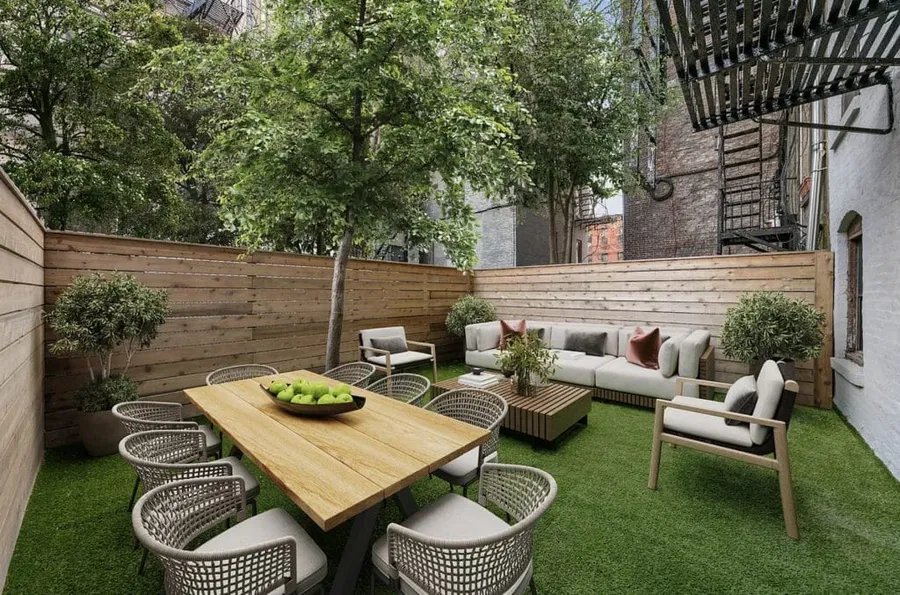
Upgrading a backyard patio invariably comes down to a choice between two perennial heavyweights: stamped concrete and interlocking pavers. Both materials promise to elevate outdoor living spaces, enhance curb appeal, and provide decades of functional entertaining area. Yet, beneath their attractive surface finishes lie fundamentally different structural philosophies, maintenance demands, and lifecycle costs.
Choosing between a monolithic poured slab and an interlocking modular system is not simply an aesthetic preference. It dictates how your patio responds to seasonal temperature swings, soil shifts, and everyday wear. Making an informed investment requires looking past showroom displays and evaluating how each material performs in the real world over five, ten, or twenty years.
Understanding the Core Differences
To evaluate these materials fairly, you have to understand how they are built from the ground up.
Stamped concrete is a continuous, poured slab of concrete that is colored, textured, and imprinted using specialized polyurethane stamps before it sets. The goal is often to replicate the appearance of natural stone, slate, flagstone, or even wood planks. Because it is poured as a single mass, it relies on internal reinforcement, such as rebar or wire mesh, and deliberately placed control joints to manage where the slab naturally relieves stress.
Pavers, by contrast, are individual units made of dry-cast concrete, clay brick, or natural stone. They are laid over a graded sub-base of crushed aggregate and bedding sand, then locked into place using joint sand and perimeter edge restraints. Rather than fighting ground tension with sheer rigid mass, a paver patio forms a flexible pavement system. It moves microscopically with natural ground expansion and contraction without losing structural integrity.
Upfront Costs and Long-Term Value
Budget is usually the primary filter for any hardscaping project, but initial price tags rarely tell the entire financial story.
Initial Installation Expenses
On day one, stamped concrete usually holds the price advantage, particularly on larger footprints. Pouring a slab is less labor-intensive than placing hundreds of individual stones by hand. On average, homeowners can expect to pay between $12 and $20 per square foot for professionally installed stamped concrete with basic to moderate decorative detailing. Highly intricate patterns, multi-toned color washes, or steep site grading can push that figure closer to the higher end of the spectrum.
Paver patios typically run between $15 and $30 per square foot, with premium natural stone or complex laying patterns reaching even higher. The higher initial investment is driven almost entirely by labor. Preparing a deep, properly compacted gravel base, establishing precise bedding sand levels, laying each unit by hand, and vibrating joint sand deep into the crevices requires substantial time, physical craftsmanship, and equipment.
The Hidden Costs of Maintenance
Where stamped concrete wins on initial budget, it often balances out over time through ongoing upkeep. Stamped concrete depends entirely on a topical protective sealer. This clear acrylic coat protects the integral and surface colors from ultraviolet degradation, moisture penetration, and salt damage. In typical North American climates, this sealer must be thoroughly cleaned and reapplied every two to three years. If you neglect this step, the surface dulls, the color washes out, and the concrete becomes vulnerable to surface scaling.
Pavers require maintenance as well, but the demands are different. Modern paver installations use polymeric sand in the joints, which hardens when activated with water to deter weeds and resist ant intrusion. Every three to five years, high-traffic or heavily shaded paver patios may need a power wash, spot touch-ups on joint sand, and an optional breathable sealer. The critical difference is that an unsealed paver still retains its fundamental durability and pigment, whereas unsealed stamped concrete begins degrading relatively quickly.
Durability, Climate Performance, and Ground Movement
The longevity of your outdoor space is heavily dictated by your regional climate, particularly if you live in an area prone to severe winter freezes.
Freeze-Thaw Resistance
Concrete is an inherently rigid material. When groundwater freezes, it expands by roughly nine percent, exerting immense upward pressure on anything sitting above it. Even with a well-prepared crushed stone base and carefully cut control joints, stamped concrete will eventually crack. Installers place joints to encourage the concrete to crack cleanly along pre-determined lines, but frost heave or significant soil shifting can easily cause irregular, visible fractures across the decorative face of the slab.
Pavers inherently resist freeze-thaw damage because the joints act as built-in shock absorbers. Each paver can shift a fraction of a millimeter independently during ground heave and settle back into position as the ground thaws. Consequently, individual units do not crack under seasonal expansion. Furthermore, quality factory-cast pavers are cured in controlled environments to reach compressive strengths upwards of 8,000 psi, making them significantly harder and less porous than standard poured-in-place concrete slabs, which typically hover around 3,000 to 4,000 psi.
Surface Traction and Temperature
A newly sealed stamped concrete patio looks striking, but that glossy topical finish presents practical challenges. When wet, high-gloss stamped concrete can become exceptionally slick, posing a slip hazard around pools, hot tubs, or during rainstorms. Installers often add micro-grit traction additives to the final coat, though this wears away over time and must be refreshed with every resealing cycle. Darker stamped stains also absorb significant solar heat, making bare feet uncomfortable in midsummer.
Pavers offer natural texture and countless joints that break surface tension, providing superior slip resistance right out of the box. They are safer around wet environments and generally retain a cooler surface temperature under direct midday sunlight, especially in lighter natural stone or permeable concrete blends.
Design Aesthetics and Customization Potential
Both options offer extensive design flexibility, but they appeal to different design sensibilities.
Stamped concrete provides continuous flow. If you want a wide, sweeping patio without regular joint lines breaking up the visual expanse, a continuous slab delivers that sleek cohesion. Skillful contractors can blend integral colors, surface release agents, and accent stains to create organic, layered color variations that mimic flagstone or rustic wood planks reasonably well from standing height.
However, stamped concrete cannot fully disguise its nature. Upon close inspection, the repeated patterns of the stamping mats can become noticeable, and the artificial grout lines stamped into the surface lack the genuine depth and shadows of true individual units. When control joints are cut straight through the decorative pattern to prevent cracking, they can interrupt the illusion of natural stone.
Pavers deliver authentic, tactile depth. Every joint is genuine, creating distinct architectural shadow lines that anchor a space visually. Pavers also offer superior flexibility for borders, soldier courses, contrasting bands, and integrated retaining walls or fire features. Because the components are modular, mixing geometric shapes, sizes, and contrasting color borders feels structurally cohesive rather than merely painted on.
Repairs, Utility Access, and Long-Term Modularity
One of the most overlooked aspects of patio installation is what happens five or ten years down the line when something goes wrong underneath the surface.
If an irrigation pipe bursts, an electrical line fails, or a tree root lifts the surface, repairing stamped concrete is a major headache. Accessing the problem requires cutting through the slab with a demolition saw, jackhammering the damaged section out, fixing the utility, and pouring a new concrete patch. Matching the exact color, stamping texture, and weathering patina of an aged concrete slab is virtually impossible. The repaired section will almost certainly stand out as an obvious blemish.
Pavers are fully modular. If you need to access underground utilities or replace a small section that has settled unevenly, you simply remove the joint sand, lift the individual pavers out, make the necessary repair or base adjustment, and reinstall the exact same stones. When re-sanded, the patio looks completely undisturbed, with zero visible scarring.
Choosing the Right Surface for Your Home
Selecting the right hardscape material ultimately comes down to balancing your immediate budget against your tolerance for long-term maintenance and regional climate realities.
Stamped concrete is often the right choice if:
-
You want to maximize your immediate square footage on a stricter upfront budget.
-
You live in a moderate or southern climate with mild winters and minimal soil expansion.
-
You prefer a seamless, continuous aesthetic without joint vegetation or sand washout.
-
You do not mind dedicating a weekend every couple of years to thoroughly clean and reseal the surface.
Pavers are usually the better investment if:
-
You reside in a region with aggressive winter freeze-thaw cycles or expansive clay soils.
-
You view your patio as a permanent, thirty-year asset and want to avoid structural cracking.
-
You need a non-slip surface around a swimming pool or frequently used outdoor kitchen.
-
You appreciate modular flexibility and the ability to repair or expand the living space seamlessly in the future.
Both materials have the power to transform an underutilized yard into an inviting outdoor retreat. By evaluating how each surface handles local weather patterns, footing traffic, and long-term upkeep, you can invest with confidence and build a patio that remains as durable as it is beautiful.