Designing a Home Workout Space While Keeping Your Gym Subscription, How Singapore Residents Balance Convenience and Professional Training
Why Home Spaces and Gym Memberships Work Better Together
Singapore living often involves compact spaces, fast paced lifestyles and a desire for efficient fitness routines. While many people consider building a small home workout area, most still prefer the structure, equipment and training benefits found in a fitness gym singapore. Instead of choosing one option, more residents are adopting a hybrid system that uses both home convenience and gym level capability. This approach delivers the best of both worlds, allowing people to stay consistent, flexible and deeply engaged with their fitness goals.
A home workout space offers instant accessibility. You can exercise early in the morning, late at night or during unpredictable schedules. But a home setup also has limits. Equipment variety, load progression, mobility space and climate control often restrict long term improvement. This is why people combine a small personal exercise nook with a professional gym membership. The home space takes care of basics, while structured sessions at a proper facility support serious progress.
The Reality of Space Constraints in Singapore Homes
Singaporeans are creative with space, but most HDB flats and condos simply cannot support full gym setups. Even when space exists, noise considerations and structural limitations reduce what can be installed. For example:
-
Heavy barbell work may cause floor vibration
-
Dropping weights can disturb neighbours
-
Large cardio machines occupy significant floor space
-
High intensity workouts heat up the room quickly
Given these constraints, a hybrid model becomes more successful. You can maintain a small, purposeful area at home for essential routines, but rely on a gym for equipment heavy sessions, structured programming and more intense conditioning.
What a Home Fitness Corner Should Include
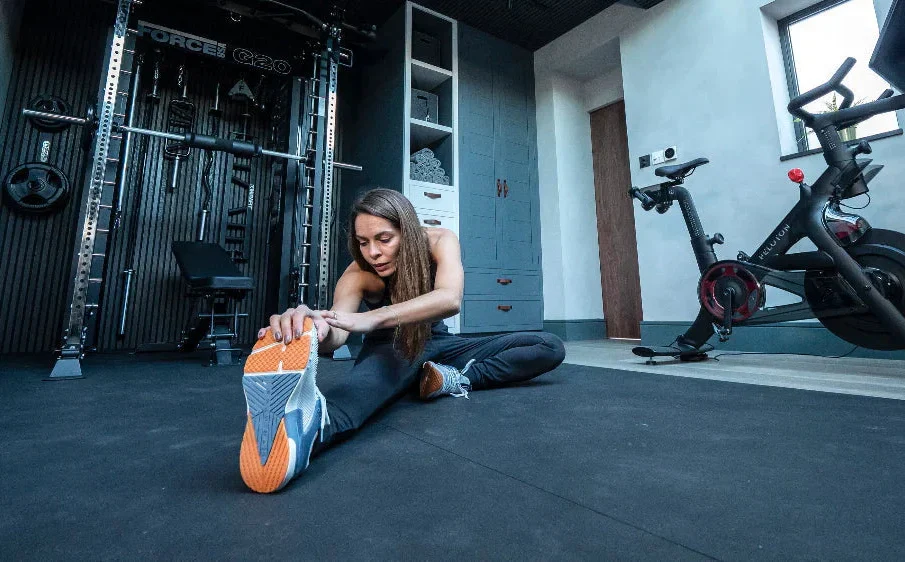
A home workout space does not need to be large or expensive. It simply needs to support movement, mobility and basic strength. The key is to choose equipment that is multifunctional, compact and safe.
Effective home items include:
-
Light dumbbells
-
Resistance bands
-
A yoga mat
-
A foam roller
-
A compact adjustable bench
-
An exercise ball
-
A kettlebell
-
Mobility tools such as blocks or straps
These tools allow for mobility training, warm up routines, core strengthening, balance exercises and light strength circuits. They also serve as a great bridge between gym days, especially on busy weeks.
Why Gym Equipment Still Matters for Long Term Progress
Home tools are ideal for general conditioning, but they cannot replicate the depth of training provided at a gym. Structured progression requires increasing load, variety and intensity. This is where professional facilities remain essential.
A gym provides:
-
Barbells and power racks for strength progression
-
Cable machines for controlled resistance
-
Stationary bikes and rowers for structured cardio
-
Space for sled push, battle ropes or agility drills
-
Climate control to maintain safe intensity
-
Trained professionals to guide programming
Home spaces improve consistency, but gyms build capacity. Combining both ensures long term success.
How Hybrid Training Supports Busy Singapore Workers
Work patterns in Singapore are often demanding. Many people alternate between office days, remote work arrangements and meetings around the city. With such varied schedules, a fixed training routine can be difficult to maintain.
A hybrid model offers flexibility. On long office days, you can perform a quick home workout. On weekends or calmer days, you can head to the gym for strength sessions or conditioning blocks. This system fits real life situations without sacrificing progress.
It also prevents the feeling of falling behind. Even on hectic days, ten minutes of movement at home maintains rhythm and mental focus.
Designing Training Cycles That Use Both Home and Gym
A well balanced hybrid training plan includes both environments in a complementary way.
Weekday Home Sessions
Shorter routines to maintain mobility and energy:
-
Morning mobility stretches
-
Core activation sessions
-
Light strength circuits
-
Low intensity cardio or step routines
Weekend or Gym Days
More structured, equipment based sessions:
-
Progressive strength work
-
Guided cardio intervals
-
Functional conditioning drills
-
Technique focused training
Recovery Days
Home based low intensity activities:
-
Gentle stretching
-
Breathwork
-
Foam rolling
-
Slow flow mobility sequences
This structure allows the body to train consistently without overloading any single environment.
Why Climate Differences Between Home and Gym Matter
Singapore’s heat and humidity can make home workouts uncomfortable unless air conditioning is used. Even with AC, rooms heat up quickly during intense sessions. Gyms offer well cooled environments with proper ventilation, which protects performance, safety and recovery.
Temperature control is crucial for:
-
Cardio intensity
-
Heavy lifting
-
Longer workout blocks
-
Fatigue management
-
Hydration stability
Home spaces are best for short bursts. Gyms are ideal for extended training under consistent conditions.
Reducing Mental Barriers Through Hybrid Training
Sometimes motivation is the biggest challenge. People often struggle with starting a workout when they feel tired or stressed. A home fitness corner removes the barrier of travel. You can begin with a short warm up at home, which sometimes builds enough momentum to complete a gym session later in the day.
Hybrid training reduces excuses. It offers options, flexibility and convenience, which builds long term consistency.
How a Gym Membership Enhances Home Training Success
A gym membership is not only about equipment access. It also enhances technique, confidence and discipline. When you train in a supportive, structured environment, your movement quality improves. This carries over into home sessions, preventing injury and boosting efficiency.
Other benefits include:
-
Expert guidance for programming
-
Regular assessment of progress
-
Community support
-
Access to recovery tools
-
Safer load progression
For many Singapore residents, the gym becomes the foundation while the home space becomes the bridge between structured sessions.
Creating an Aesthetic and Functional Home Fitness Area
Because space is limited, your home fitness corner should be visually calming and practical. Clutter creates mental resistance, while a clean, simple environment invites consistency.
Tips include:
-
Use a dedicated shelf for storing equipment
-
Keep the mat rolled neatly
-
Work near a window for ventilation
-
Avoid placing equipment in walking pathways
-
Use small storage boxes for bands and mobility tools
A well organised fitness corner feels inviting and encourages routine.
Time Efficiency, the Real Advantage of Hybrid Training
Singapore residents value productivity. A hybrid training model maximises time by allowing home sessions on tight days and gym sessions when more time is available. It supports realistic life patterns without compromising fitness progress.
This system also helps parents, caregivers and shift workers who have unpredictable schedules. A short home workout can maintain cardiovascular and muscular rhythm even on days when leaving the house is difficult.
Why Many Singapore Residents Choose Established Gym Networks
In the last stages of hybrid training, people often look for gyms that provide reliability, structured programmes and a motivating environment. Many prefer well established centres because consistency is easier to maintain. Members who use hybrid routines often train at places like True Fitness Singapore where professional guidance and equipment variety support long term improvement.
Real Life FAQ
Do home workouts replace gym sessions?
Home workouts are helpful for maintenance, but they cannot replace structured strength and conditioning done in a gym environment. Both work best together.
How much space do I need at home for a good workout?
A small corner that fits a yoga mat is sufficient for mobility, core work and light strength. You do not need a full room.
Will hybrid training slow down my progress?
No. When done correctly, it improves consistency and supports faster overall progress because you remain active even during busy periods.
What equipment should beginners buy first?
A mat, resistance bands and a pair of light dumbbells are enough to start. These items support a wide variety of exercises.
Should I use AC during home workouts?
Yes. Training in high heat can cause fast fatigue. Air conditioning keeps the body cool enough for safe exercise.
How many days should I train in the gym versus at home?
Most people benefit from two to three gym days per week and two to three short home sessions, depending on goals.