
Quartz vs. Granite: Which Countertop Survives a Busy Kitchen?
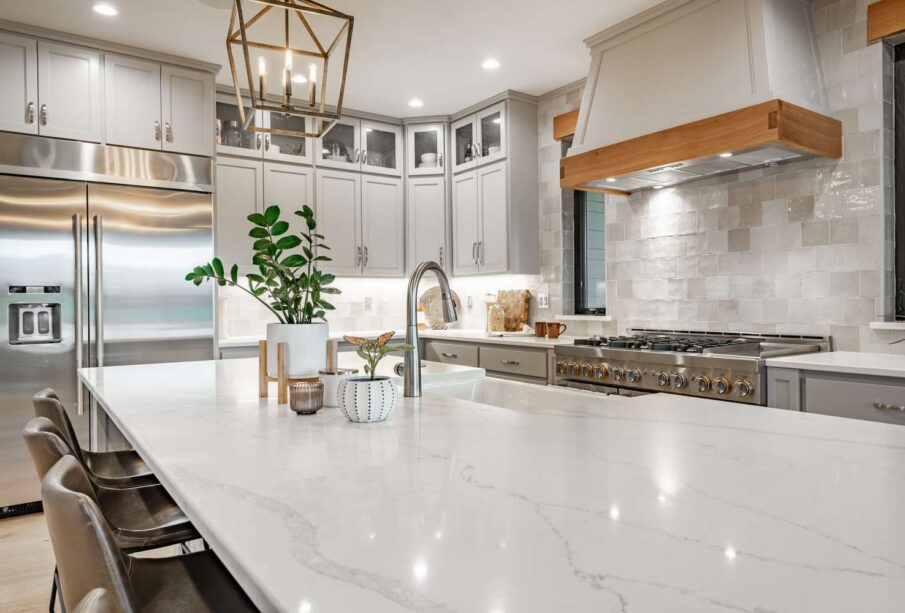
On an ordinary Tuesday evening in a bustling household, a kitchen island endures an astonishing amount of punishment. A hot cast-iron skillet searches for a resting spot, a cutting board slips during vegetable prep, red wine splashes beside an open bottle, and a child drags an unpadded backpack across the counter edge. In high-traffic homes, countertops are not decorative museum pieces. They are functional workbenches that must absorb daily impacts, acidic spills, thermal shifts, and constant cleaning without showing permanent scars.
For decades, homeowners evaluating premium surfaces have narrowed their choice down to two heavyweights: natural granite and engineered quartz. Both command respect in the showroom, and both represent a substantial financial investment that can easily dictate the tone and resale value of an entire home. Yet, beneath their polished surfaces lie completely different structural compositions that respond to kitchen hazards in vastly different ways. Determining which slab will truly survive your household requires looking past color swatches and evaluating how these materials handle the messy friction of real-life cooking.
Anatomy of the Slabs: Natural Igneous Rock vs. Engineered Stone
To understand how each surface performs when challenged by moisture, blades, or hot cookware, you have to look at how they are made.
The Geological Heritage of Granite
Granite is a one-hundred-percent natural igneous stone formed over millions of years deep within the earth’s crust. As molten magma cools slowly under intense subterranean pressure, quartz, feldspar, mica, and other minerals crystallize together into dense, interlocked grains. Quarry workers extract these massive stone deposits in single blocks from mountainsides in Brazil, India, Italy, and North America before slicing them into slabs and polishing their faces.
Because granite is a direct product of geological variation, no two slabs are ever identical. Every sheet carries its own unique swirls, veining, mineral deposits, and microscopic fissures. That organic uniqueness is granite’s greatest aesthetic strength, but it also means that structural density can vary slightly from one section of a slab to another.
The Chemistry of Engineered Quartz
Quartz countertops, often sold under brand names like Cambria, Silestone, and Caesarstone, do not arrive directly from a mountain quarry. They are composite products manufactured through an industrial compression method pioneered decades ago.
A standard quartz slab consists of roughly ninety to ninety-three percent pulverized natural quartz minerals—one of the hardest minerals on earth—bound together with seven to ten percent polymer resins, polyester binders, and mineral pigments. Under intense vacuum pressure and vibration, this mixture is compacted into a slab with zero internal voids or air pockets. The resulting material combines the physical hardness of crushed crystalline rock with the flexible, non-porous resilience of advanced polymers.
The Stain Test: Porosity, Spills, and Chemical Exposure
Spills are an unavoidable part of cooking. Whether it is a forgotten puddle of balsamic vinegar, a smear of yellow mustard, or a glass of Cabernet Sauvignon left out overnight, a busy kitchen demands a surface that will not drink in pigments.
Porosity and the Granite Sealing Cycle
Because granite is an authentic natural stone, it possesses a network of microscopic capillaries running between its crystallized mineral grains. Untreated granite is porous. If left unsealed, liquids will migrate into those pores via capillary action. Dark liquids like red wine or coffee can stain deep into the stone, while cooking oils can leave persistent, shadowy grease marks that require poultice treatments to draw out.
To prevent this, granite requires a penetrating impregnator sealer. Quality sealers enter the pores and bond with the stone, creating an invisible, hydro- and oleo-phobic barrier that causes liquids to bead up on the surface.
However, sealing is not a one-time event. In an active kitchen with daily wipe-downs, friction and household cleaners gradually strip this protective coat. Homeowners must commit to resealing their granite every one to three years, depending on the stone’s density and how frequently the counters are cleaned. The simple water droplet test reveals the status of your protection: drop a spoonful of water onto the surface; if it beads tightly, the seal is sound. If the stone darkens and absorbs the water within ten to fifteen minutes, moisture is penetrating, and the surface is vulnerable.
The Impermeable Nature of Quartz
Quartz completely bypasses the porosity problem. Because polymer resins occupy every microscopic space between the crushed quartz aggregates, the finished surface has an absorption rate approaching zero.
Liquids cannot penetrate the resin matrix. Red wine, lemon juice, hot coffee, and food dyes sit harmlessly on top of the slab until you wipe them away with a damp sponge. You never need to purchase sealers, schedule reapplication weekends, or worry about an unsealed perimeter absorbing water around an undermount sink rim.
The caveat with quartz lies in chemical exposure rather than liquid absorption. While quartz shrugs off everyday food acids, the polymer resins are chemically sensitive to harsh, high-pH or highly abrasive cleaners. Oven cleaners, bleach, paint thinners, nail polish remover, and aggressive scrubbing pads can chemically react with or strip the resin surface, leaving behind permanent dull spots or discolored patches that cannot simply be wiped away.
The Heat Frontier: Scorching and Thermal Shock
When moving quickly between the stove and the island, cooks frequently look for an immediate surface to set down a hot Dutch oven, a cookie sheet fresh from the oven, or a boiling pot of pasta water. This is where the structural battle between granite and quartz turns decisively in favor of natural stone.
Granite’s Natural Resistance to High Heat
Formed inside the extreme heat of volcanic activity, granite handles high thermal loads with ease. Placing a hot sauté pan or a 400-degree baking dish directly onto a granite countertop will not scorch, blister, or melt the surface. The stone simply absorbs and dissipates the heat across its thermal mass.
The only slight risk with granite is thermal shock, which occurs when a piping hot vessel is placed onto an unusually cold slab during a freezing winter day, causing localized expansion that can theoretically crack the stone. In practice, however, typical indoor residential conditions make thermal cracking exceptionally rare. For home cooks who prioritize speed and despise hunting for trivets while holding heavy cookware, granite provides unmatched peace of mind.
Quartz and the Melting Point of Resins
Thermal resistance is the most significant operational vulnerability of quartz countertops. While the crushed mineral content inside the slab can withstand high heat, the polymer resins binding everything together cannot.
Most quartz formulations begin to break down, melt, or scorch when exposed to temperatures exceeding three hundred degrees Fahrenheit. Placing a sizzling cast-iron skillet, a slow cooker left on high for eight hours, or an electric griddle directly onto quartz can cause irreversible thermal damage. The resin can scorch, turning light-colored slabs a distinct brownish-yellow, or the rapid localized expansion can cause the slab to crack cleanly across the heat source.
In a quartz kitchen, trivets, silicone hot pads, and heat-diffusing boards are strictly mandatory. If you have family members or houseguests who instinctively slide roasting pans straight from the oven onto the nearest flat surface, quartz demands constant vigilance.
Physical Hardness: Scratches, Impacts, and Chipping
Everyday kitchen life involves heavy appliances, sharp cutlery, and dense kitchen gear colliding with edges and flats. Both materials offer exceptional surface hardness, but their structural differences influence how they respond to blunt force.
Scratch Resistance on the Flat Plane
On the Mohs hardness scale, which rates minerals from one (talc) to ten (diamond), standard kitchen cutlery rates around 5.0 to 5.5.
Granite rates between 6.0 and 7.0, while quartz consistently registers at a solid 7.0.
Because both materials are harder than carbon or stainless steel, dragging a dull kitchen knife across either surface will not scratch the countertop. In fact, cutting directly on either surface will ruin the edge of your expensive chef’s knives long before it leaves a mark on the stone. However, quartz offers slightly better defense against rare, hyper-hard abrasives like ceramic bowl bottoms or unglazed stoneware plates, which can occasionally leave light surface scratches on softer mineral inclusions found in some granite varieties.
Edge Durability and Impact Damage
The primary hazard to both materials is not a slicing knife, but blunt mechanical impact from heavy objects. Dropping a full cast-iron pot or banging a heavy ceramic slow-cooker insert against the rim of an undermount sink cutout exerts immense localized pressure.
Natural granite can contain internal natural fissures. A severe, direct blow from a heavy object on a weak point can cause a flake or chunk to break off. Fortunately, repairing a chipped granite edge is straightforward: a professional stone restoration specialist can mix clear or color-matched epoxy, fill the void, level it, and polish it flush, rendering the repair virtually invisible to the naked eye.
Quartz possesses slightly superior flexural strength compared to natural stone because the resin binder gives the slab a minute amount of elasticity under stress. However, quartz is by no means immune to edge chipping. If a heavy pan strikes a sharp, straight-cut edge of a quartz counter, a chip will pop out.
Repairing chipped quartz is technically possible with specialized UV-curing acrylics or epoxies, but matching the uniform, manufactured color and translucent depth of engineered quartz is considerably harder than matching natural stone, often leaving a noticeable seam or dull spot where the repair was made. Choosing a rounded edge profile, such as a bullnose, demi-bullnose, or quarter-inch eased edge, dramatically reduces the likelihood of chipping for both materials by distributing impact energy over a curved plane.
Aesthetics, Seaming, and Visual Consistency
Beyond physical survival, you have to enjoy looking at the surface every day. The visual choices you make during selection heavily affect how seams appear and how the material ages under ambient light.
Organic Drama vs. Engineered Consistency
Granite is celebrated for its organic, artistic movement. Sweeping veins, mica sparkles, and unpredictable ribbons of mineral color give each installation a distinct, hand-crafted character. The challenge with granite arises when a kitchen design requires multiple slabs. Matching seams across large L-shaped corners or extended island runs can be difficult. Fabricators must carefully map the cut layouts so that veining flows naturally from one piece to the next, though an exact match is rarely possible.
Quartz provides manufactured consistency. When you select a sample from a showroom board, the slab installed in your home will match that sample with near-perfect fidelity. If your kitchen requires two or three slabs, the background coloration and aggregate distribution remain uniform across the entire space, resulting in tighter, less noticeable seams. Furthermore, modern quartz manufacturing has advanced dramatically, producing convincing interpretations of fine Italian marbles like Calacatta and Carrara without the extreme maintenance and acid-etching vulnerabilities of real calcite marble.
Sunlight Exposure and UV Degradation
A little-known factor that destroys kitchen surfaces over time is natural ultraviolet light. If your kitchen features floor-to-ceiling windows, large skylights, or unshaded south-facing exposures that bathe countertops in direct sunlight for hours each day, material composition matters immensely.
Granite is completely immune to UV radiation. Formed deep underground and polished with diamond abrasives, it will not fade, yellow, or degrade when subjected to decades of intense sunlight. It is the premier choice for outdoor kitchens, sunrooms, and sun-drenched breakfast bars.
Quartz, on the other hand, should never be installed in outdoor kitchens or areas exposed to persistent, direct sunlight. The polymer resins that hold the stone particles together are sensitive to ultraviolet rays. Over time, prolonged UV exposure causes the resin to break down chemically, resulting in distinct yellowing, fading of dark pigments, and surface clouding that cannot be polished away or reversed.
Maintenance Routines and Daily Hygiene
In a fast-paced home, the time required to keep counters clean and hygienic directly impacts your daily routine.
Granite demands a disciplined maintenance approach:
-
Wipe down daily using warm water and mild dish soap or a dedicated pH-neutral natural stone cleaner.
-
Avoid acidic cleaning agents like vinegar, lemon juice, or ammonia, which eat away at the protective sealer.
-
Perform the water droplet test every six to twelve months to identify when the sealer is wearing thin.
-
Clean grease splatters around the stove promptly to prevent oils from sitting on low-seal areas.
Quartz delivers a truly low-maintenance lifestyle:
-
Wash the surface with warm water, mild liquid soap, and a microfiber cloth.
-
Because the surface is completely non-porous, it holds official certifications from organizations like the National Sanitation Foundation (NSF), meaning bacteria, viruses, and mold cannot penetrate or colonize the interior matrix.
-
No seasonal sealing, conditioning, or specialty waxes are ever required.
-
Skip heavy bleach solutions, abrasive scouring pastes, and high-alkaline cleansers to keep the resin finish pristine.
The Verdict: Matching the Slab to Your Kitchen Lifestyle
Declaring a single winner between quartz and granite is impossible because their strengths and weaknesses mirror opposing kitchen philosophies.
If your kitchen workflow revolves around high-heat cooking, rapid transitions from the stove to the counter, direct sunlight, and an appreciation for raw natural materials, granite is the undisputed survivor. It takes scorching pans without flinching, stands up to UV exposure, and offers an authentic, one-of-a-kind geological presence that artificial composites cannot fully replicate. As long as you are willing to spend twenty minutes resealing the surface once a year and stick to mild cleaners, granite will easily outlast your cabinets.
If your household prioritizes zero-maintenance living, effortless stain resistance, and sleek modern aesthetics, quartz is the superior choice. It eliminates the chore of periodic sealing, handles messy spills without a trace of discoloration, and provides an ultra-hygienic, non-porous food prep station that cleans up in seconds. You simply have to respect its thermal boundary by keeping trivets within arm’s reach of your stove.
By assessing how your family actually cooks, preps, and lives around the island, you can choose the countertop material that will not only look stunning on installation day, but thrive under the relentless demands of your real-life kitchen for decades to come.


